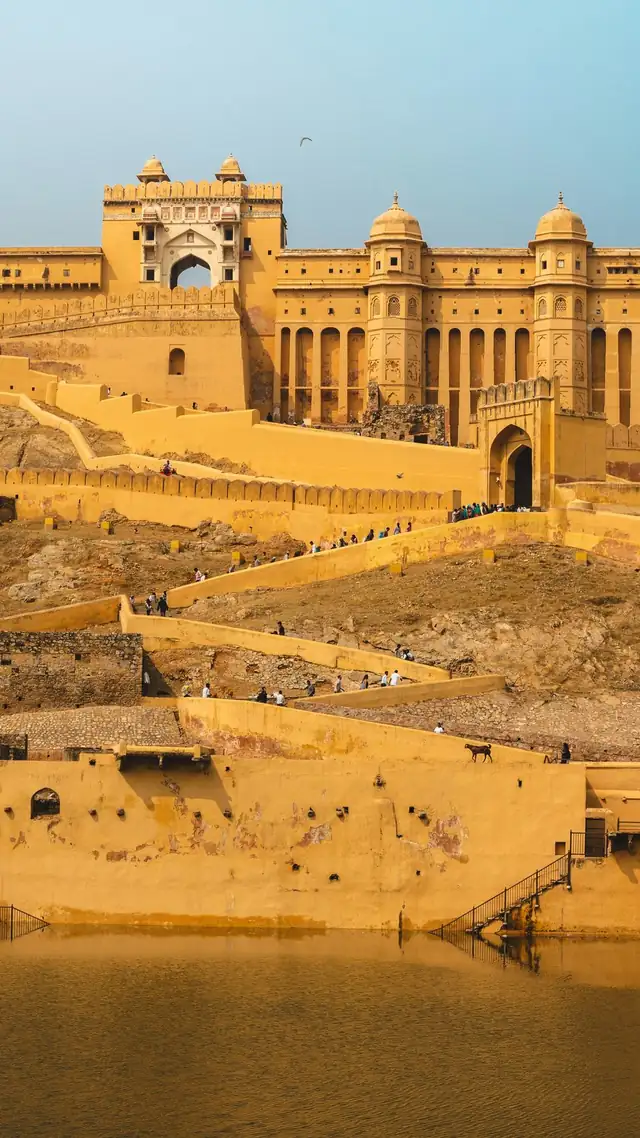
Jaipur
Rajasthan's capital: hill forts, royal palaces and the bazaars of a planned 18th-century city.
- Famous for
- Amber Fort, Hawa Mahal, the City Palace and Jantar Mantar; block-printed textiles, gems and blue pottery.
- Best time
- October to March
- Suggested stay
- 2 days
- Getting there
- Jaipur International Airport; well connected by rail and road (Delhi about 5 hours)
The story of Jaipur
Jaipur was founded in 1727 by Maharaja Sawai Jai Singh II as one of India's first planned cities, laid out on a grid with wide bazaars. The walled city was painted pink in 1876 to welcome the Prince of Wales, and the colour has stayed.
The Walled City of Jaipur is a UNESCO World Heritage Site (2019), as is Jantar Mantar (2010), and Amber Fort is part of the 'Hill Forts of Rajasthan' listing.
Interesting things to see and do
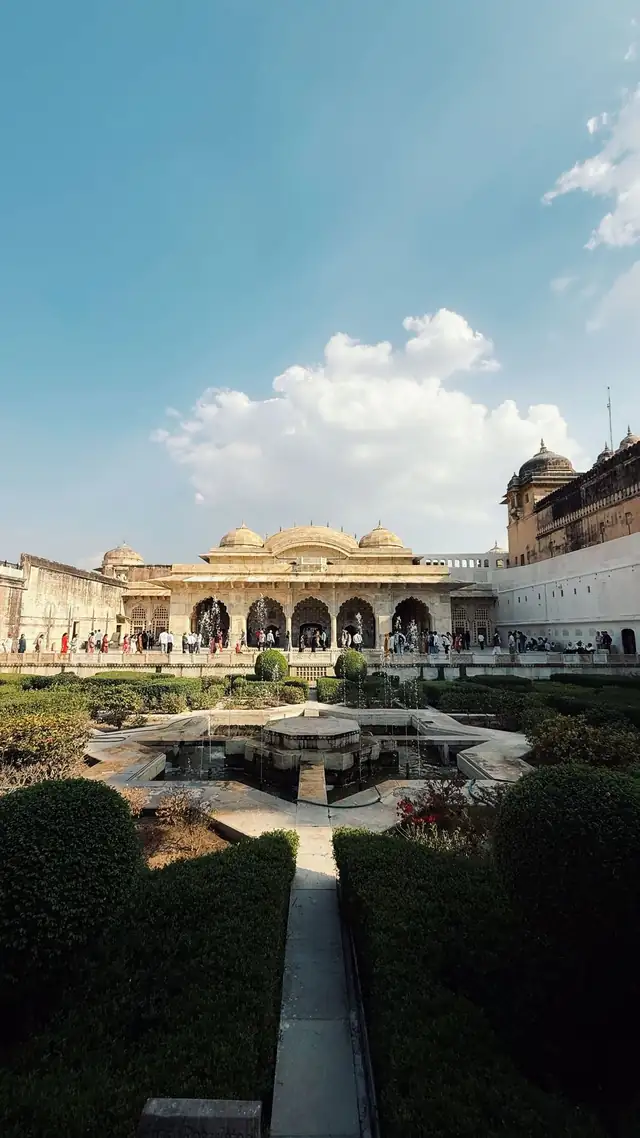
Hilltop palace-fort of red sandstone and marble; see the Sheesh Mahal.
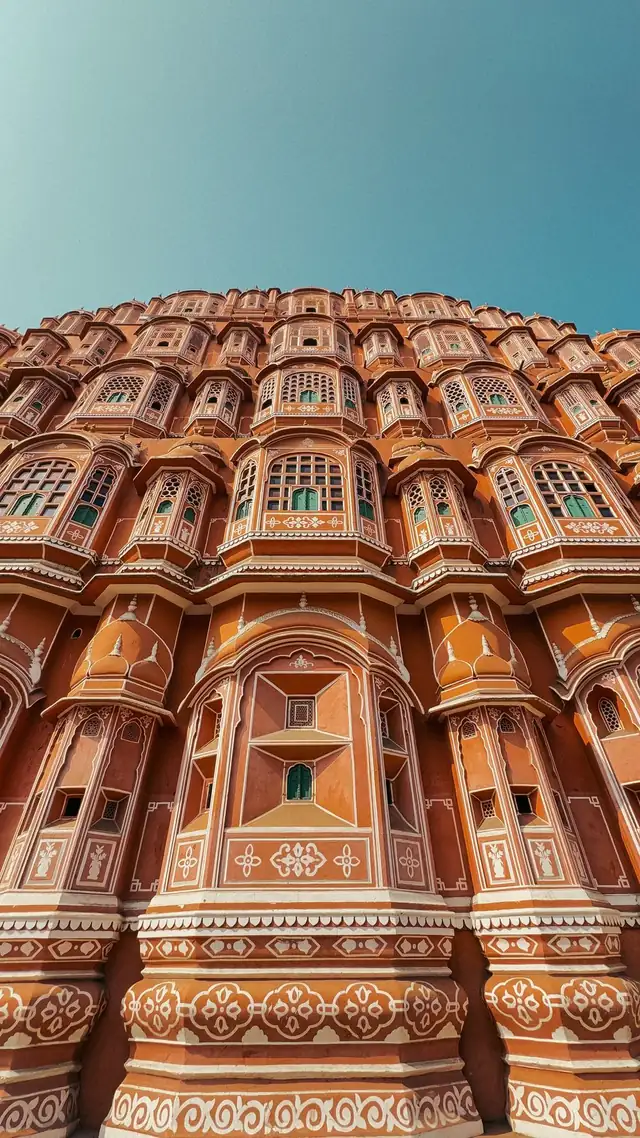
The 1799 'Palace of Winds' with 953 small windows.
Still the royal residence, with museums and courtyards.
Giant 18th-century astronomical instruments, including the world's largest stone sundial.
Sunset view over the whole city.
Palace in the middle of Man Sagar lake.
Johari, Bapu and Tripolia bazaars.
Village-style evening of folk dance and Rajasthani thali.
Day-by-day plan
A suggested pace. We adjust it to your dates, hotel and travel style.
Old City
- Morning: City Palace and Jantar Mantar
- Photo stop at Hawa Mahal
- Lunch: Rajasthani thali
- Afternoon bazaar walk, Johari & Bapu bazaars
- Sunset at Nahargarh Fort
Forts & lakes
- Early start for Amber Fort before crowds
- Panna Meena ka Kund stepwell
- Jal Mahal photo stop
- Albert Hall Museum
- Evening at Chokhi Dhani